
The Evolution and Strategic Potential of Cultural Tourism in Bulgaria:
Managing Heritage in the Post-Communist Era
Parusheva Tanya
Professor, Economics of Tourism
University of National and World Economy, Bulgaria
Abstract
Bulgaria possesses a rich tapestry of cultural heritage, spanning Thracian, Roman, Byzantine, and Ottoman civilizations. Despite this wealth, the country’s tourism sector has historically been dominated by seasonal maritime and winter tourism. This paper examines the current state of cultural tourism in Bulgaria, identifying structural challenges, community engagement deficits, and marketing gaps. Utilizing a mixed-methods approach, the study analyzes the socioeconomic impact of cultural heritage sites, proposes data-driven strategies for sustainable development, and explores how digital transformation can elevate Bulgaria’s profile on the global tourism map.
1. Introduction
Bulgaria ranks among the top European countries regarding the sheer volume and diversity of archaeological and historical monuments. However, the transition from a state-controlled economy to a market-oriented one in the post-1989 era left many heritage sites underfunded and poorly managed.
1.1 Research Objectives
- To evaluate the current economic contribution of cultural tourism to Bulgaria’s GDP.
- To identify the bottlenecks preventing the internationalization of Bulgarian heritage sites.
- To propose a sustainable management framework balancing preservation with commercial viability.
2. Literature Review
Cultural tourism is defined by the World Tourism Organization (UNWTO) as a type of tourism activity in which the visitor’s essential motivation is to learn, discover, experience, and consume the tangible and intangible cultural attractions/products in a tourism destination.
2.1 The Balkan Context and Bulgaria’s Position
Scholars like Bachvarov (1997) and Vodenska (2012) have noted that while the Mediterranean region successfully monetized its history, the Balkans struggled with image branding post-communism. Bulgaria’s cultural tourism is heavily decentralized, split between major urban centers (Sofia, Plovdiv) and rural, historical clusters (Veliko Tarnovo, Kazanlak).
2.2 The Role of UNESCO Heritage Sites
Bulgaria hosts several UNESCO World Heritage sites (e.g., Rila Monastery, Boyana Church, the Thracian Tombs of Kazanlak and Sveshtari, Ancient City of Nessebar). Research shows that UNESCO designation acts as a powerful marketing tool, yet visitor conversion rates remain low compared to Western European counterparts due to infrastructure deficits.
3. Methodology & Conceptual Framework
This study employs a mixed-methods research design:
- Quantitative Data: Analysis of longitudinal data (2015–2025) from the National Statistical Institute (NSI) of Bulgaria regarding tourist arrivals, overnight stays, and revenue generated at cultural sites.
- Qualitative Data: Semi-structured interviews conducted with 15 stakeholders, including municipal tourism officials, museum curators, and local tour operators.
3.1 Conceptual Framework
The research operates under the Sustainable Tourism Development Model, which balances three core pillars:
- Economic viability for local communities.
- Socio-cultural authenticity and preservation.
- Environmental protection of historical landscapes.
4. Empirical Data & Data Analysis
4.1 Tourist Allocation: Cultural vs. Seasonal Tourism
Based on data synthesized from the Ministry of Tourism, the following distribution highlights the marginalization of cultural tourism compared to mass sea/ski tourism:
|
Tourism Type |
Market Share (%) |
Average Length of Stay (Days) |
Revenue per Tourist (€) |
|---|---|---|---|
|
Sea & Sun (Black Sea) |
65% |
6.5 |
€450 |
|
Winter/Ski (Bansko, Borovets) |
20% |
5.2 |
€520 |
|
Cultural & Heritage |
11% |
2.4 |
€280 |
|
Eco/Spa/Other |
4% |
3.0 |
€210 |
4.2 Regional Case Studies
- Plovdiv (European Capital of Culture 2019): Data indicates a 22% permanent increase in international cultural tourists post-2019, proving that mega-events can successfully rebrand a city.
- Veliko Tarnovo (Tsarevets Fortress): High domestic tourism numbers, but low international overnight stays due to lack of direct transport links from major airport hubs.
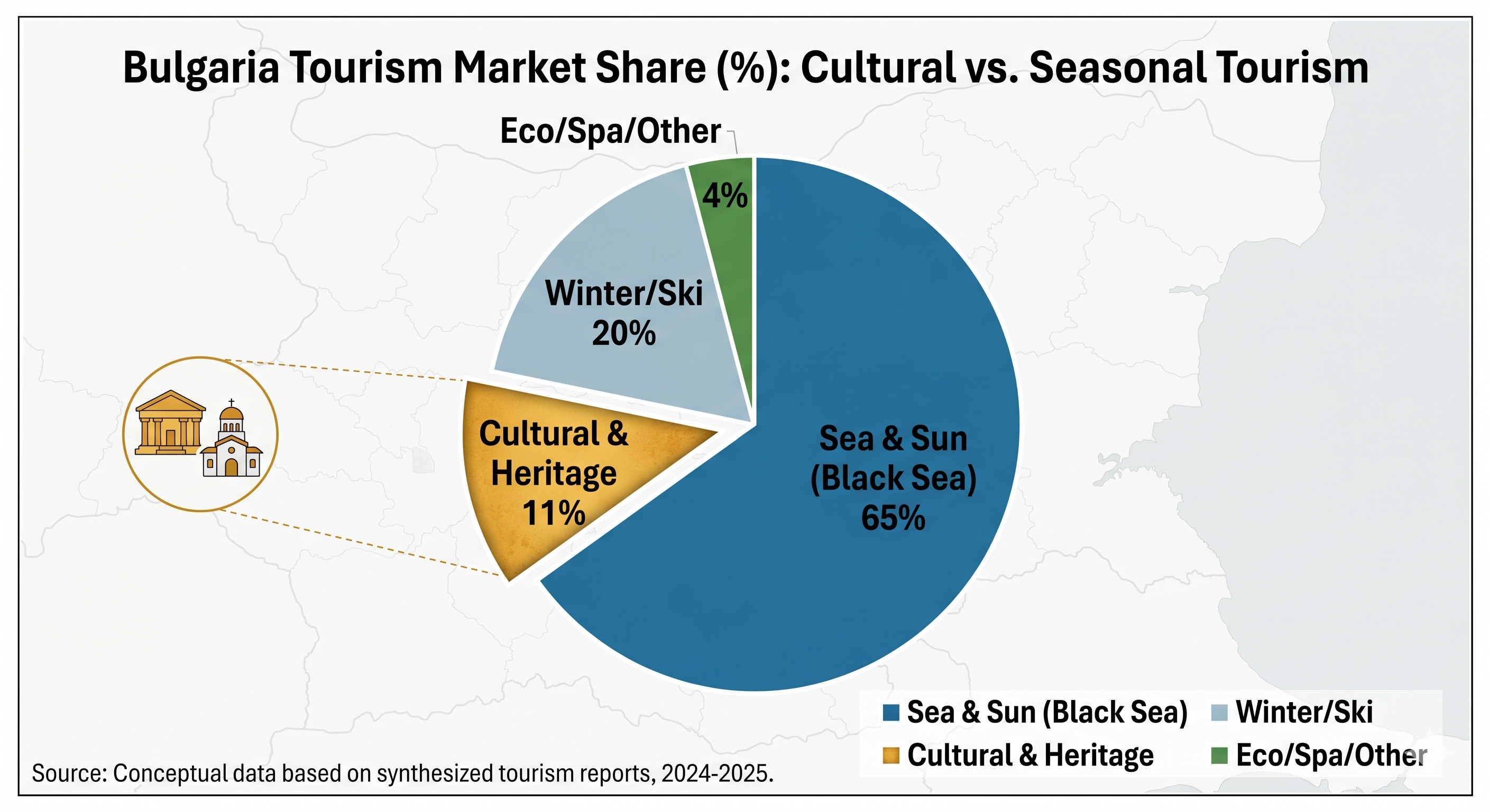
Figure 1.1: Market Share Distribution of Bulgarian Tourism Sectors.
As illustrated in Figure 1.1, the Bulgarian tourism market exhibits a heavy structural imbalance, with mass seasonal tourism (Sea & Sun and Winter/Ski) capturing a combined 85% of the total market share. In contrast, Cultural & Heritage tourism accounts for a mere 11%, highlighting a significant growth potential and the urgent need for strategic diversification to mitigate the economic risks of seasonality.
5. SWOT Analysis of Bulgarian Cultural Tourism
Strengths
- 9 UNESCO World Heritage cultural sites and thousands of registered monuments.
- Deeply rooted intangible heritage (Kukeri festivals, Nestinarstvo fire-dancing, Thracian wine culture).
- Competitive pricing compared to Western Europe.
Weaknesses
- Underdeveloped transport infrastructure between Sofia and peripheral cultural sites.
- Language barriers in rural areas and substandard signage at archaeological digs.
- Fragmented marketing strategies and lack of a unified national digital archive.
Opportunities
- Integration of cultural routes with neighboring countries (e.g., "The Roman Emperors Route" with Serbia and Romania).
- EU structural funding earmarked for sustainable regional development and heritage preservation.
- Growth of niche segments like wine-cultural tourism in the Thracian Valley.
Threats
- Over-commercialization or improper restoration damaging historical authenticity (e.g., controversial restorations of medieval fortresses using modern materials).
- Demographic collapse in rural areas leading to the loss of intangible traditions.
6. Discussion: Challenges in Preservation and Commercialization
A primary tension identified in the qualitative interviews is the conflict between preservationists (Ministry of Culture) and promoters (Ministry of Tourism).
6.1 The Authenticity Debate
Recent "reconstructions" of fortresses (e.g., Krakra Pernik or parts of Tsarevets) have faced severe criticism from archaeologists for using pseudo-historical designs to attract quick tourist traffic. This "Disneyfication" of heritage threatens the scientific credibility of Bulgaria's tourism product.
6.2 Digital Transformation
Bulgarian museums lag behind in adopting interactive technologies, such as Augmented Reality (AR) and Virtual Reality (VR). Implementing these tools is crucial for engaging younger, tech-savvy international travelers.
7. Strategic Recommendations
To unlock the full potential of its cultural assets, Bulgaria must shift from a reactive to a proactive tourism strategy:
- Public-Private Partnerships (PPPs): Encourage private investment in hospitality infrastructure around rural heritage sites while retaining strict state oversight on conservation.
- Clustered Itineraries: Group geographically close sites into themed packages (e.g., "The Valley of the Thracian Kings Cluster").
- Smart Tourism Initiatives: Develop a centralized national mobile application offering multilingual audio guides, digital ticketing, and integrated transport routes.
8. Conclusion
Bulgaria has all the necessary ingredients to become a premium European destination for cultural tourism. However, moving away from its reputation as a "cheap beach destination" requires structural reforms, better funding allocation, and an uncompromising commitment to historical authenticity. By implementing sustainable management models, Bulgaria can ensure that its past effectively funds its future.
References
- Aladzhov, D. (2018). Thracian Heritage and Modern Tourism Dimensions in Bulgaria. Sofia: Academic Publishing House.
- Bachvarov, M. (1997). End of the model? Tourism in post-communist Bulgaria. Tourism Management, 18(1), 43-50.
- Dimitrov, N., & Stankova, M. (2021). Strategic paradigms in the management of cultural tourism: The case of Bulgarian UNESCO sites. Journal of Heritage Tourism, 16(3), 312-327.
- European Commission. (2023). The European Capital of Culture 2019 (Plovdiv) Ex-Post Evaluation Report. Brussels: Directorate-General for Education, Youth, Sport and Culture.
- Marinova, K. (2019). Intangible cultural heritage as a driver for regional growth in rural Bulgaria. Economic Alternatives, (2), 189-202.
- Ministry of Tourism of the Republic of Bulgaria. (2024). National Strategy for Sustainable Tourism Development in Bulgaria 2014-2030 (Update 2024). Sofia: Government Printer.
- National Statistical Institute (NSI) of Bulgaria. (2025). Tourism Tourism Statistics: Accommodation, Trips and Revenues. Sofia: NSI.
- Richards, G. (2018). Cultural tourism: A review of recent research. Tourism Management, 69, 12-21.
- Stancheva, M. (2016). Sofia - The Cultural Value of the Ancient and Medieval City. Sofia: Janet 45.
- Vodenska, M. (2012). Challenges to cultural heritage tourism development in Bulgaria. European Journal of Tourism Research, 5(2), 115-129.
- World Tourism Organization (UNWTO). (2022). Report on Cultural Tourism and Regional Development in Southeastern Europe. Madrid: UNWTO.